For hospitals, clinics, laboratories, data centers, and other mission-critical facilities, power is not just a utility input. It is part of operational continuity.
When the grid is stable, backup power may feel like an insurance policy. But in weak-grid environments, high-load regions, remote campuses, aging utility infrastructure, or areas exposed to extreme weather, backup power becomes a daily planning issue.
The question is no longer only, “Do we have backup power?”
The better question is, “Can our power infrastructure respond fast enough, operate long enough, and adapt to changing site conditions?”
That shift is why battery energy storage systems are becoming more important in mission-critical power planning. For critical facilities, BESS is not simply about storing electricity. It is about creating a controllable energy buffer between the grid, the load, and the backup system.
Mission-critical facilities often operate with sensitive and high-value loads. In healthcare environments, power interruptions can affect medical equipment, refrigeration, lighting, IT systems, and essential facility operations. In data centers, even short disturbances can create risks for servers, cooling systems, network continuity, and service uptime.
Traditional backup architectures usually depend on a combination of UPS systems and diesel generators. UPS systems help bridge short interruptions. Generators provide longer-duration backup. This architecture remains essential, especially in regulated and high-reliability environments.
But weak grids create additional challenges.
Voltage fluctuations, unstable utility supply, peak demand events, generator start delays, fuel logistics, and load transfer complexity can all affect power continuity. At the same time, many facilities are adding new loads from cooling systems, digital infrastructure, EV fleets, medical equipment, and electrified building systems.
This makes resilience more complex than simply having backup equipment on site.
Critical power needs coordination.

A battery energy storage system can support mission-critical sites by adding speed, flexibility, and controllability to the power architecture.
In a weak-grid environment, BESS can help stabilize the site-side power strategy by supporting critical loads during grid events, reducing sudden demand spikes, and helping coordinate grid, generator, PV, and load behavior through energy management.
For healthcare and data center operators, this does not mean BESS replaces the UPS or the generator. A better way to think about it is that BESS becomes an additional resilience layer.
The UPS protects against immediate interruption. The generator supports extended backup. The EMS coordinates operation. The BESS provides a controllable energy buffer that can respond quickly and support a more flexible site energy strategy.
This layered approach is especially useful for campuses and facilities that want to move from basic backup power toward microgrid-ready infrastructure.
This is where MPack 261 fits into the conversation.
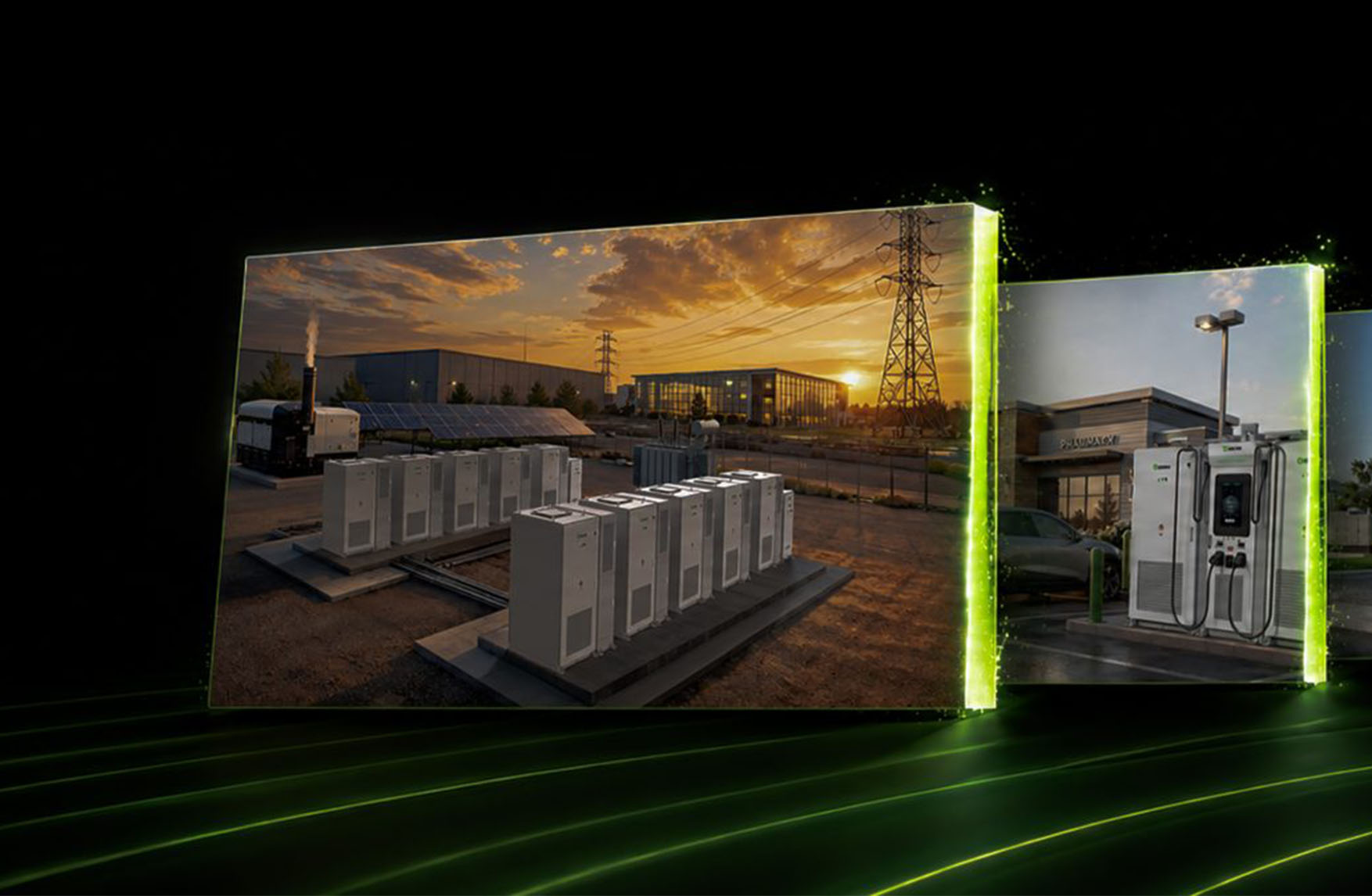
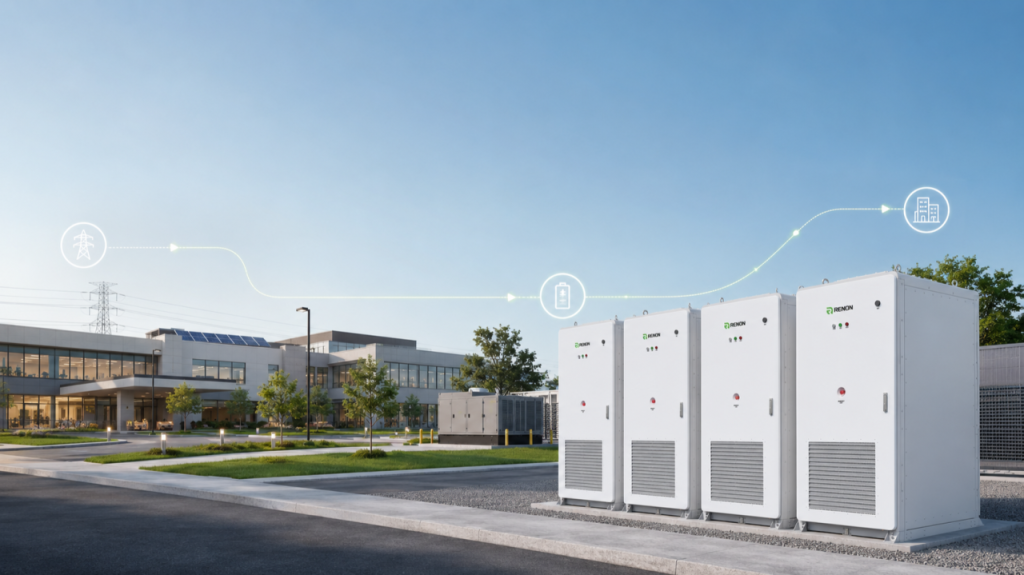
MPack 261 is designed as a liquid-cooled C&I energy storage system for commercial and industrial applications. Built around a modular 261kWh storage platform, it can be configured for different site architectures, including grid-connected operation, grid-tied/off-grid operation, solar-storage integration, and larger array-level or matrix-level systems.
For mission-critical facilities, the value is not only the cabinet capacity. The value is the system architecture around it.
MPack 261A integrates battery storage, PCS, EMS, BMS, liquid cooling, and fire suppression in a standardized cabinet design. With optional STS configuration, the system can support fast grid-to-off-grid switching for sites that require continuity during grid interruptions. With EMS integration, it can also support remote monitoring, dispatch, and operational management.
For healthcare sites, MPack 261 can be positioned as part of a resilient power architecture that supports critical load planning, peak load management, and backup system coordination.
For data centers, MPack 261 can support power resilience strategies where BESS, transformers, EMS, UPS, and generator systems need to work together as part of a campus-level energy plan.
The key is not to treat energy storage as a standalone battery cabinet. The key is to design it as part of a mission-critical power system.

Mission-critical sites should not evaluate backup power only by asking how much equipment they have. They should evaluate how the entire power system behaves during real operating conditions.
What happens when the grid becomes unstable? How fast can the site respond? Which loads need priority support? How long does the backup system need to carry the load? Can the system coordinate with generators, PV, or other distributed energy resources? Can the operator monitor and dispatch energy intelligently?
These questions are especially important in weak-grid regions where grid quality, utility capacity, and outage risk may vary from site to site.
A modern resilience strategy should consider several layers:
Grid connection and utility reliability UPS and short-duration ride-through Generator backup and fuel logistics BESS response and load support EMS control and remote monitoring PV or distributed energy integration Critical load prioritization Maintenance, testing, and compliance requirements
This is where a modular BESS platform can help. Instead of building every project from scratch, facility owners, EPCs, and system integrators can start with a standardized energy storage building block and configure it around the site’s critical load profile, electrical infrastructure, and backup power strategy.

For mission-critical facilities, backup power is no longer only about emergency response. It is becoming part of long-term infrastructure planning.
Healthcare facilities need continuity. Data centers need uptime. Commercial campuses need stable operations. Weak-grid sites need flexibility. EPCs and system integrators need systems that are scalable, configurable, and easier to integrate into real project conditions.
MPack 261 is built for that shift. It gives mission-critical sites a liquid-cooled, modular C&I energy storage platform that can support backup power coordination, weak-grid resilience, load management, and microgrid-ready system design. Not just stored energy. A stronger foundation for mission-critical power resilience.
Ready to evaluate your weak-grid or mission-critical power site? Explore how MPack 261 can support your backup power and energy resilience strategy!
 English
 Español
 Français
 Deutsch
 日本語
 Русский язык
 Português
 بالعربية