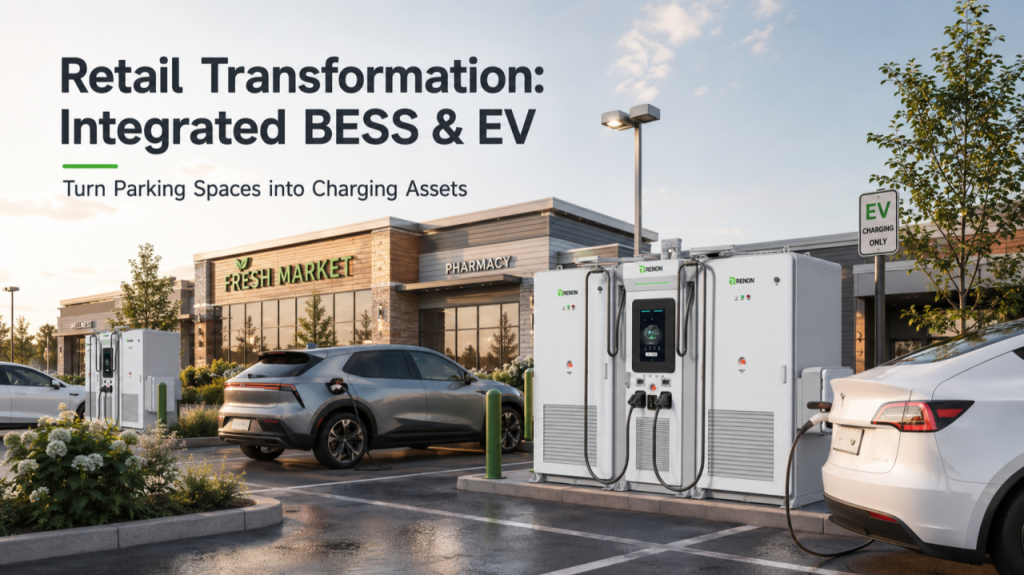
Retail has always been built around location. The right location brings traffic, traffic creates sales, and sales create long-term property value. But as EV adoption grows, another part of the retail property is becoming more valuable: the parking lot.
For grocery stores, shopping centers, pharmacies, restaurants, convenience stores, and retail plazas, parking is no longer just supporting space. It can become a new energy asset — one that supports EV charging revenue, customer dwell time, brand value, and future site monetization.
That is why retail EV charging is becoming more than an amenity. It is becoming part of the retail business model. But the opportunity is not simply about adding chargers. It is about building a charging model that fits the site, supports the customer journey, and can be repeated across more locations. This is the kind of challenge EStand is designed to solve.

Many retail owners start with a simple question: can we add EV fast chargers to this parking lot? But the better question is whether the site can support fast charging in a way that is profitable, reliable, and repeatable.
High-power DC fast charging changes the power profile of a retail site. It can create new peak demand, increase pressure on existing grid capacity, and introduce new questions around utility costs, demand charges, installation timelines, and long-term operation.
For one location, this may be a project challenge. For a retail chain, it becomes a scaling challenge. If every store needs a different electrical design, a different installation process, and a different operating model, the rollout becomes slow and difficult to manage.
That is why fast charging should not be treated as a simple equipment purchase. Fast charging is not just a charger problem. It is a site power strategy.

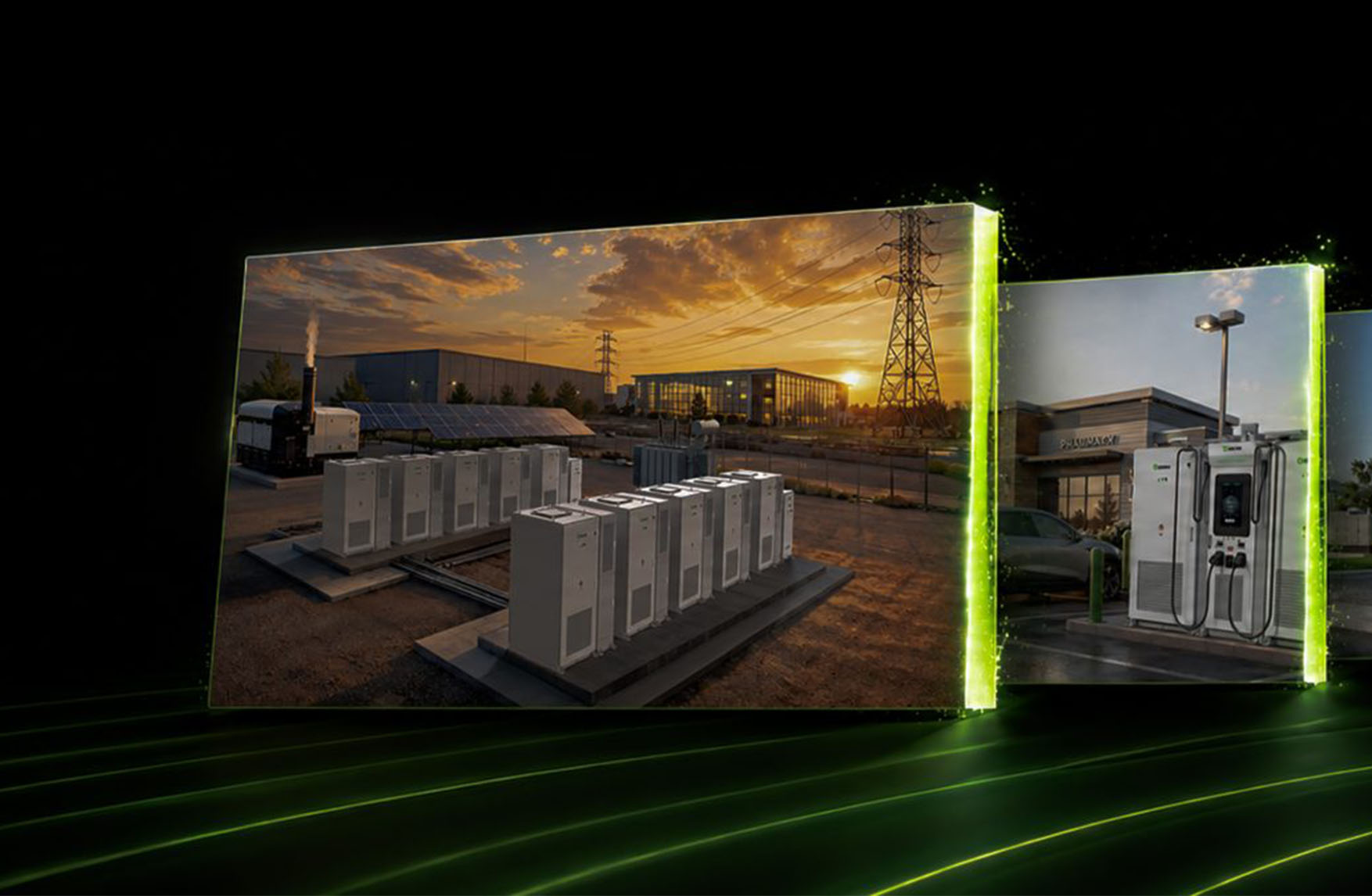
EStand is a storage-integrated DC fast charging solution built for commercial sites that need more than a standalone charger. It brings together battery energy storage, DC fast charging, EMS control, and scenario-based deployment logic into one site-level model.
For retail owners, that matters because the charging experience is only one side of the equation. The other side is how the site manages power, peak load, operating cost, and future expansion. EStand is designed to help retail sites move from isolated charger installation to a more controlled energy infrastructure model.
The integrated battery energy storage system can support high-power charging demand. The DC fast charging system delivers the driver-facing experience. The EMS helps monitor and coordinate system operation at the site level. Together, these capabilities help retail owners think beyond one charger or one location.
For a single store, EStand can support a pilot project. For a retail chain, it can support a repeatable multi-location rollout strategy. This is especially important for retailers that want to start small, validate the business case, and then scale across a regional or national network.

Retail EV charging monetization is not only about selling electricity. That is the first layer, but not the only one.
A retail owner can generate direct charging revenue from paid EV charging sessions. Depending on the operating model, drivers may pay by energy, time, session, or membership access. But charging also creates value through customer behavior. When drivers stop to charge, they often stay on site. That additional dwell time can support in-store purchases, food and beverage sales, pickup orders, and repeat visits.
EV charging can also make a retail site more competitive. For drivers, a location with fast charging, lighting, food, restrooms, and retail services can be more attractive than a standalone charging stop.
There are also partnership models. Some retail owners may choose to operate charging directly. Others may partner with a charging operator, lease parking spaces, use a revenue-share model, or create a hybrid structure where the retailer controls the customer experience while a partner manages operation.
In each model, EStand plays a different role. For an owner-operated site, it can become part of the retail property’s own energy asset. For an operator partnership, it can provide a more complete storage-integrated charging solution for the site. For a multi-site retail portfolio, it can help create a repeatable deployment framework instead of treating every location as a custom project.
The bigger opportunity is clear: parking can become a revenue-generating energy asset.
The best starting point is usually not a large rollout. It is a well-selected pilot site.
Retail owners should choose a location with strong traffic, visible parking, suitable electrical conditions, and clear customer demand. Before moving into a formal solution, the project team should evaluate site layout, available power, utility costs, expected utilization, operating hours, budget, and decision-making structure.
This is where EStand’s scenario-based approach becomes useful. Instead of forcing every site into the same configuration, EStand can be evaluated based on the site’s power conditions, retail traffic, charging demand, operating model, and long-term rollout plan.
A smaller retail location may begin with a pilot-oriented EStand model. A stronger traffic location may require a more scalable configuration. A regional retail network may need a repeatable site template that can be adapted across multiple stores.
A strong pilot should answer practical questions: which locations are the best fit, what charging business model makes sense, how EV charging affects customer behavior, what power-side constraints need to be managed, and whether the model can be repeated across the network.
One site proves the model. Multiple sites build the network. The network becomes the asset.

Retail transformation is no longer only about store formats, digital tools, or customer experience. It is also about energy.
As EV charging becomes part of everyday mobility, retail properties have a clear opportunity to turn parking spaces into charging assets. But long-term success will depend on more than charger power. It will depend on the right site power strategy, the right business model, and the right path to scale.
EStand helps retail owners approach that transition with a storage-integrated fast charging solution designed for real commercial sites — not just to add chargers, but to turn retail parking into long-term infrastructure value.
Ready to evaluate your first retail EV charging site? Explore how EStand can support your pilot site and multi-location rollout.
 English
 Español
 Français
 Deutsch
 日本語
 Русский язык
 Português
 بالعربية