A lot of EV fast charging projects begin with the same question: how many chargers do we need? It feels like the right place to start. But for commercial EV charging infrastructure, that question usually comes too early.
Before choosing charger quantity, power rating, or battery capacity, project teams need to understand what the site can actually support — and what the business model needs the system to do.
A retail parking lot, a fleet depot, a C&I campus, and a charging operator site may all need DC fast charging. But they do not use power in the same way. They do not have the same traffic patterns, peak charging hours, utility tariffs, operating windows, or expansion plans.
That is why EV charging sizing should not be driven by assumptions. It should be driven by parameters. When sizing is too small, the system may struggle during peak demand, create charging delays, or fail to support the site’s operating needs. When sizing is too large, the project may carry unnecessary CAPEX, lower utilization, and a weaker business case.
The right system is not always the biggest one. It is the one that fits the site.
Fast charging looks simple from the outside. Add chargers, connect power, start serving drivers. In real projects, it is rarely that simple.
High-power DC fast charging changes the electrical profile of a site. It can create new peak load events, increase pressure on transformer capacity, expose the site to demand charges, and require more coordination with utilities, EPCs, operators, and property owners.
This is where many projects run into trouble. The conversation stays focused on charger power, while the real question is whether the site power strategy is strong enough to support charging over time.
For example, a retail site may need charging that matches customer dwell time. A fleet depot may need charging that fits dispatch schedules. A C&I campus may need to support EV charging without disrupting peak load management. A CPO may need a model that can be copied across multiple locations without redesigning every site from zero.
The charger is only one part of the answer. The site determines the sizing logic.
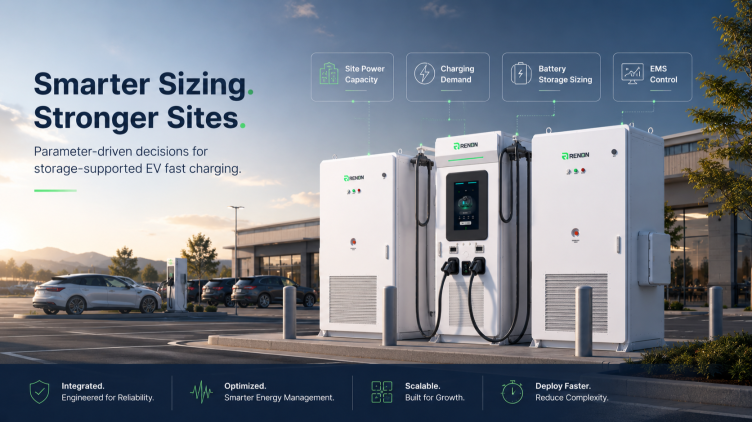
A better EV charging site design starts with a few practical inputs.
The first is site power capacity. This includes available grid capacity, transformer limits, existing load profile, utility constraints, and demand charge exposure. Without this information, it is difficult to know whether the site can support fast charging directly or whether battery energy storage should be part of the design.
The second is charging demand. How many sessions are expected per day? What types of vehicles will use the site? How long will they stay? When does charging peak? What charging speed is actually required for the business model?
The third is the operating model. Retail charging, fleet charging, public charging, workplace charging, and C&I charging all behave differently. A retail owner may care about customer dwell time and parking monetization. A fleet operator may care about vehicle readiness. A charging operator may care about utilization and uptime. An EPC may care about project boundaries and repeatable installation.
The fourth is battery energy storage sizing. Storage should not be selected because a larger number looks stronger on a datasheet. It should be tied to peak shaving, demand management, charging schedule, grid constraints, PV integration potential, and expected energy throughput.
The fifth is scalability. Is this a single pilot site, or the first step in a multi-site rollout? A configuration that works for one location may not be the best long-term model if the customer plans to scale across parking lots, retail stores, fleet depots, or regional charging stations.
Good sizing connects these inputs before the product decision is made.

This is where EStand becomes more than a charging product.
EStand is a storage-integrated DC fast charging solution designed for commercial and industrial sites. Instead of treating the charger, battery storage, and energy management system as separate pieces, EStand brings them together into one site-level solution.
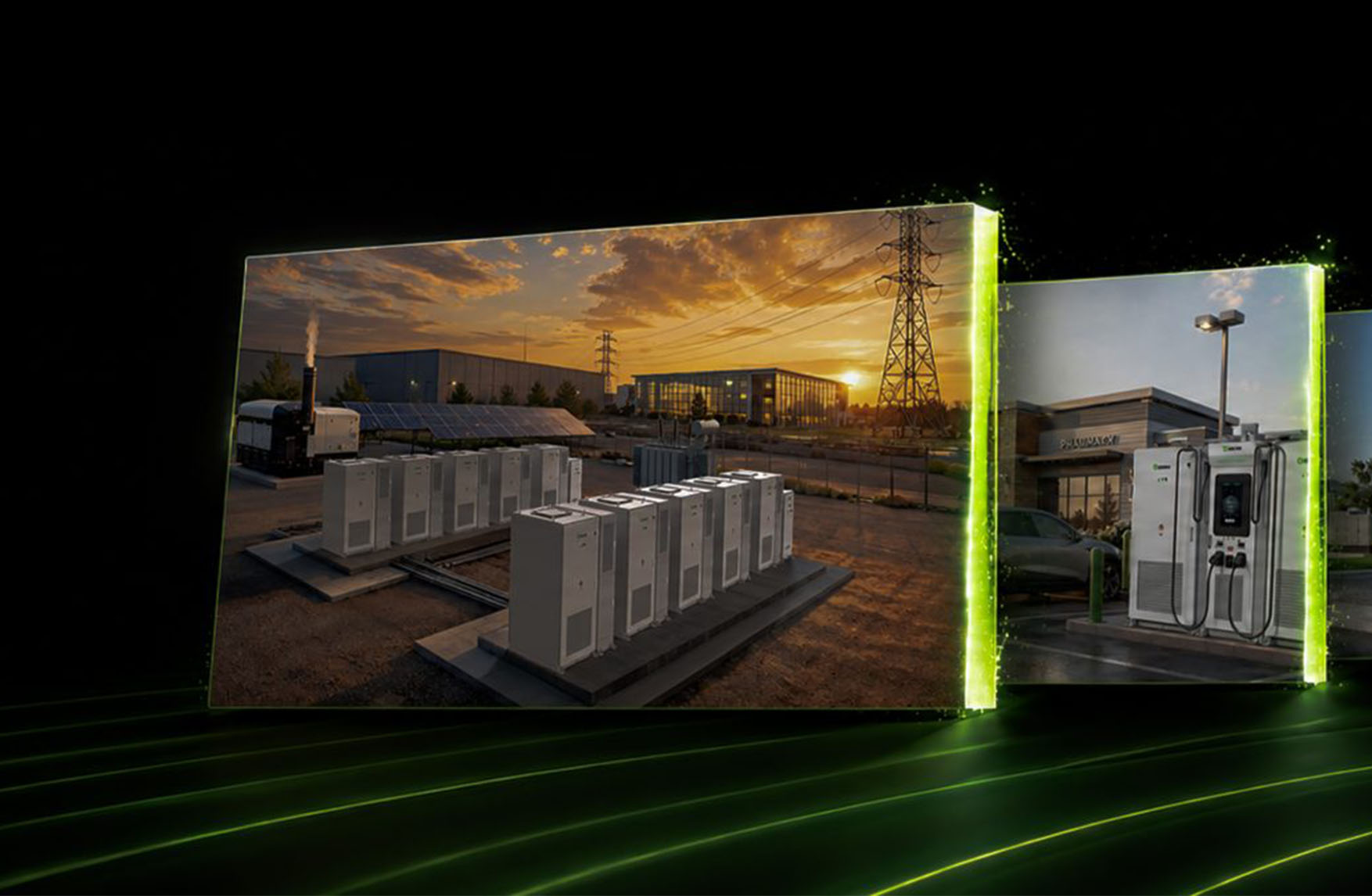
A standard EStand unit combines MPack 261A liquid-cooled C&I battery energy storage cabinets with a 400kW dual-gun DC fast charging module. The charging system supports CCS1/NACS compatibility and modular power configuration, allowing output to be configured around project needs rather than a fixed assumption.
The EMS is also part of the sizing logic. It supports functions such as peak shaving, demand management, PV-storage-charging-diesel coordination, anti-backflow control, and dispatch management. For commercial EV charging sites, that matters because the goal is not only to deliver charging power. The goal is to manage how charging interacts with the site, the grid, and the operating model.
With EStand, the conversation can move from “which charger should we install?” to “what configuration makes sense for this site?” That shift is important. It helps customers and project teams evaluate charging demand, site power, energy storage, EMS control, and future expansion together.
[Insert Visual 3: EStand Integrated Architecture — Storage + DC Fast Charging + EMS]
Parameter-driven EV sizing is not only useful for one project. It is also useful for scaling.
Many customers do not want to build just one charging site. Retail chains want to start with one location and expand across the network. Fleet operators want repeatable depot charging. CPOs want standardized station models. EPCs and system integrators want fewer custom designs and clearer project boundaries.
This is where a storage-integrated charging platform can create value beyond the first installation.
For a pilot site, EStand can help validate the charging model based on actual site conditions. For higher-utilization sites, the configuration can be scaled based on charging demand and energy storage needs. For larger station deployments, multiple EStand units can be coordinated through array-level and matrix-level architecture, supporting capacity expansion and station-level energy management.
The first site should not be treated as an isolated project. It should be treated as a learning model. One site proves the sizing logic. The next site improves the standard. The standard becomes the rollout strategy.
[Insert Visual 4: From Pilot Site to Multi-Site Rollout]
A stronger sizing conversation starts with better information.
Before selecting an EStand configuration, project teams should prepare the site type and location, available electrical capacity, existing load profile, utility tariff, demand charge structure, expected charging sessions, vehicle types, average dwell time, peak charging window, operating hours, future expansion plan, budget range, project timeline, and decision-making structure.
These details do not slow the project down. They help prevent the wrong system from being selected too early.
For commercial EV charging, guessing is expensive. Under-sizing can limit the customer experience. Over-sizing can weaken the business case. A parameter-driven process helps bring the technical and commercial sides of the project into the same conversation.

As EV charging expands across retail, fleet, parking, C&I, and operator-led infrastructure, sizing will become one of the most important decisions in the project lifecycle.
The market does not need more charger-only conversations. It needs better site planning, smarter battery energy storage sizing, stronger EMS-based control, and more repeatable deployment models.
EStand is built for that direction. Not just to add DC fast chargers, but to help commercial sites build storage-integrated EV charging systems around real site parameters, real operating needs, and real rollout goals.
Ready to evaluate your EV charging site? Start with your site data. Build the right EStand configuration here!
 English
 Español
 Français
 Deutsch
 日本語
 Русский язык
 Português
 بالعربية